Like spaghetti, this Filipino-style macaroni salad is one of the things we adapted from- Kawaling Pinoy
the west and made our own. Unlike its plain ol’ western counterpart, it
packs flavor and flair with a hodgepodge of shredded chicken, cubed
cheese and ham, raisins and crushed pineapple. By adding our own Pinoy
taste and twist to a classic dish, we turned it into something more
delicious.
Filipino-style Macaroni Salad
Ingredients
- 1 (16 ounces) package elbow macaroni, uncooked
- 1 pound chicken breast or thigh meat, boneless and skinless
- 6 hard boiled eggs, peeled and coarsely chopped
- 1 medium onion, peeled and diced
- 1 (14 ounces) can crushed pineapple
- ½ cup sweet pickle relish
- 1 large carrot, peeled and diced
- 1 cup quick-melt cheese (Velveeta or Eden), cubed
- 1 cup ham, cubed
- 1 cup raisins
- 1-1/2 cups mayonnaise
- ½ cup sweetened condensed milk
- salt and pepper to taste
Instructions
- In a pot of salted boiling water, add macaroni and cook for about 8 to 9
minutes or until firm to bite. Drain, rinse under cold running water and
allow to completely cool. Set aside.- In a pot, add chicken meat and enough water to cover. Bring the water to a boil and then lower to a simmer. Simmer chicken for about 15 to 20 minutes or until cooked through. Drain from liquid, allow to completely cool and shred. Set
aside.- In a pot, bring water to a boil. Add diced carrots and
cook for about 30 seconds. With a slotted spoon, remove from water and
plunge into an ice bath until completely cool. Drain and set aside.- In a large bowl, combine macaroni, chicken, carrots, ham, eggs, raisins,
onions, cheese, mayonnaise, sweetened condensed milk and pineapple including packing juice. Gently stir together until evenly distributed.
Season with salt and pepper to taste. Refrigerate for about 30 minutes
to allow flavors to meld.
Wednesday, December 24, 2014
Filipino-style Macaroni Salad


Spaghetti Recipe
A quick, yet flavorful take on the classic spaghetti with meat sauce.
|

- grams dried spaghetti
- grams bacon
- grams beef - ground
- small onion finely diced
- small carrot peeled and grated
- cloves garlic finely minced
- dry white wine
- grams canned whole tomatoes
- tablespoons ketchup
- teaspoon
- teaspoon black pepper
- teaspoon oregano
Units:
Instructions
- Put
a large pot of salted water on the stove over high heat. If you taste
the water after dissolving the salt it should taste pretty salty. This
flavors the pasta. Whatever you do, do not add oil to the water. This is
done to keep the noodles from sticking together while boiling, but it
will also keep your pasta sauce form sticking to the noodles when you
eat it. - Add the bacon to a pan over medium high heat and fry
until a good amount of fat has rendered out of the bacon. Add the
ground beef and brown it, breaking up the meat with a spatula until it's
cooked. Transfer the meat to a bowl, leaving as much of the fat as you
can in the pan.
down the heat to medium low. You should have about a tablespoon of
rendered fat in the pan, if you have significantly more or less, dump
some out or add some olive oil. Add the onions, carrot and garlic, and
sauté until the onions are soft and the mixture is about 1/3 of its
original volume. Depending on how small you diced your onions, this
should take anywhere from 10 to 15 minutes. This is where your sauce
gets a lot of its flavor, so don't skimp on time.
up the heat to high, then return the meat to the pan. Add the white
wine and boil until there's almost no liquid left, stirring to prevent
burning. This not only burns off the alcohol, it concentrates the flavor
of the wine.
down the heat to medium-low and add the canned tomatoes, ketchup, salt
and pepper. Put the oregano in the palm of your hand, and then use your
other hand to rub the oregano in a circular motion to crush it into a
powder before adding it to the pan. Us a spatula to break up the
tomatoes, being careful not squirt tomato juice on yourself.
your water should be boiling. Add your pasta and stir during the first
few minutes of cooking to keep it from sticking together. I usually boil
pasta for 1 minute less than what the package directions say (i.e. 8
minutes instead of 9).
is done. You can either plate the pasta and top with sauce, or
personally I like to dump the pasta straight into the sauce and toss it
together before serving.
All images
and text on this website are protected by copyright. Please do not post
or republish this recipe or its images without permission. If you want
want to share this recipe just share the link rather than the whole
recipe.
and text on this website are protected by copyright. Please do not post
or republish this recipe or its images without permission. If you want
want to share this recipe just share the link rather than the whole
recipe.
Saturday, December 20, 2014
16 Ways To Create More Money For Travel
We know from all the emails we get from our readers that “lack of money” is one of the biggest things holding you back from having more travel in your life.
If you want to travel more over the coming new year it’s now time to start thinking about your finances and channeling what money comes into your life in the right direction.
This can be easier said than done and everyone has different financial challenges and backgrounds, but there are simple ways and more creative ways to add to your bank balance.
 As we’ve mentioned over and over again a lot of it comes down to your priorities. If you want more travel in your life you have to make travel a priority, especially with regard to getting your finances in order.
Recently we wrote about 30 ways to reduce living expenses so you could have more money for travel.
Today we’re going to focus on ways to create more money to add to your travel fund once you’ve got your expenses under control.
So lets make the intention right now to put one of the strategies below into practice, and please share any of your own tips in the comments.
1. Rent out spare rooms / take in a room mate
We had two boarders living with us before we left for our five year honeymoon in 2002. Some of that money went to bills (reducing costs) and what was left went straight into the travel fund.
When I lived in London, I lived with anywhere from 5-25 people. It meant I shared a room usually with 2-3 people; sometimes I slept on the lounge room floor. I know this is not the comfort most people want – I was young and single at the time – but my rent was £35 a week, with bills and grocery staples included. This meant I had so much more money for travel.
I don’t regret this sacrifice as it meant I created amazing memories and I formed friendships with people around the world whose couches I could sleep on when I visited their country.
Consider Airbnb
Maybe you could list your property with Airbnb and rent out an extra room or your whole property.
Our friend in North Carolina is a single guy with a 4 bedroom home. He just took in a room mate who’s monthly payment now cuts his mortgage in half – meaning more money for travel.
2. Work multiple jobs
This was something I totally embraced pre-kids. At one stage I had 9 part-time jobs on rotation. I was never one for the standard working job life. Working a full-time and a part-time job is tough, especially when your full-time one is teaching.
After a stressful and tiring day teaching my students, I’d don the waitress outfit and head to the local restaurant until around midnight. It sucked, but I was committed and all the extra money went into the travel fund and the odd wine to calm my nerves before bed!
I worked multiple jobs in Australia, Bangkok, Dublin and London.
3. Live off one wage
If you are a couple, consider living off one wage and save the other. This is whatCraig and I did for 12 months. Once you commit to it, you’ll find it easier than you think. You’ll find a way to manage and if you bank the one wage immediately you won’t notice its absence so much.
Sit down with your partner and create a budget. Cut out all unnecessary expenses and focus purely on covering your needs.
Decide on whose wage will best cover these expenses. Wiggle the budget around until you can make it fit the salary comfortably. Leave a little buffer.
Set up a plan to bank the other wage as soon as it is received. Put it straight into the high-interest savings account you have set up. Don’t stress if you can’t bank the entire wage of one partner, bank as much as you can of the one wage. Make it a game to see how much you can increase it by each week.
It’s a great way to get you used to living off little and needing less.
4. Work extra shifts
Some jobs pay extraordinarily well for overtime. My brother in-law earns great money because he chooses the shitty night and weekend shifts. This gives him lots of penalty rates and overtime. The extra money means he can travel more during the year.
Craig always worked on a Saturday during his construction days to earn the extra cash we needed for travel.
5. Ask for a raise
Have you been employed at your position for sometime and are exceeding expectations, or are overdue for a raise? Politely ask for one. Or why not add more value to your job – think promotion!
6. Be a tutor
One of my rotating part-time jobs was tutoring. I tutored some of the local school children. It was only for a few hours a week, but the extra cash added up and it was tax free.
I also gave private English lessons to a student at my school in Bangkok, which gave me a few extra dollars. Craig and I also tutored a Buddhist monk in Bangkok, but that one was for love and fascination.
7. Automate your savings
Pay yourself first! Savings should be your priority. Set up an automatic transfer that deducts 10% (or higher) of your wage each week and have it transferred into your travel savings account (a high interest account online).
If all your money is easily accessible and sitting in your everyday spending account the temptation is always there to spend it. It’s a lot easier to keep track of your savings if you have them separate from your spending money. If you don’t touch or see it you won’t miss it.
8. Use a high-interest savings account
There are savings bank accounts that can pay you good interest, well at least in Australia. Depending on the balance we can earn from $50- $150 a month. Remember it all adds up and its money for nothing. In places like Asia and Africathat can go a long way.
In Australia we discovered an everyday transaction account at ING Direct that gave us 5% cashback for every transaction under $100. It lasted for 6 months. Now they are offering the same deal long term at 2% a month. We are right on top of that and earning money for normal everyday spending.
9. Set savings goals
Just like you would for buying a house or a car, decide how much you need for travel then set goals and time frames to accomplish them.
Start short term. Set a particular date for accomplishing shorter-term goals, and make sure the goal is attainable within that time period. Figure out how much you need to save per week or per pay check.
- First save for your airfare.
- Then accommodation.
- Then spending money.
It’s easier if you break it down into increments. Just like in reducing your expenses, you’ll see results sooner which will keep you motivated.
10. Luxury Verse Needs
Get back to basics.
You don’t really need a lot to survive, nor to have a great life really. You can get by with less. Your life will feel less cluttered, which will free up even more energy in order to attract more money to you.
Would you prefer your life to be full of memories or full of stuff?
Ditch the labels, the expensive price tags, the brand new cars and other goods, the fancy restaurants, and top shelf drinks. Start living on a needs basis, not a want.
11. Create multiple streams of income
This is the key to a continual flow of money. Plus, it gives you lots of security in case one stream dries up.
When we were saving initially to travel these were the ways we had multiple streams of income:
- Full-time jobs
- Part-time jobs
- Rent a spare room
- Investments
- Interest
- and Craig would do odd building jobs for friends.
Now that we have our own blogging business, we receive income in a multitude of ways and I am always adding in more when they come along. These are the current various streams:
- freelance writing
- freelance content creation
- working on campaigns with brands
- sponsored posts
- advertising
- affiliate sales
- eBook sales
- speaking fees
- ambassador programs
Little bits from each stream add up.
Want more Money Project Gold? Add your email below for free updates:
12. Save your tax refunds
I hope you receive a refund check. If you don’t then celebrate as it means you are earning decent money, you just need to make sure you are putting it to good use.
I don’t know how many times the money we received back from the government helped us live for an extra month on the road. Consider it money you have been saving all year and put it straight into your travel fund.
13. Save any bonuses or windfalls
Do you receive bonuses from your work? What about birthday or holiday money? And windfalls?
We were due to leave on a summer road trip down to Florida in 2005. We had no money and it was looking like we’d have to cancel. A month before departure date, I received an unexpected $800 bonus from school. Awesome! It went straight in the travel fund; we’d at least get 2 weeks of travel out of it.
Then, at the last minute, a friend from Dublin contacted me to say she had a check waiting for me. Teachers were getting back pay with a raise they should have been given years before. Lucky these years were the time I taught there. It was so lovely to receive a check for €2, 500.
Hello Florida road trip!
14. Collect all your spare change
You will not miss the spare coins in your wallet. In fact, you are more than likely to spend them just to get rid of the weight.
Take the coins, or even all your $1 bills and put them into your money box. We give all our coins to Kalyra and she has over $400 in the bank. That’s her entry ticket plus accommodation to Disneyland paid for.
Pick up loose coins. I never walk over any coins I find on the ground. I don’t care if it is 10 cents and I don’t care who is looking. I pick it up and always say,
“Wow. Look at this money the Universe is sending my way. Thank you so much.”
And then I put it in my wallet believing that more is coming my way in the most unexpected surprises.
15. Move back in with your parents
Ouch! This is certainly not something we envisioned as adults with two kids but we did it for three years with Craig’s parents – a result of our real estate fiasco. A sacrifice that has helped us get back on our feet.
You certainly don’t have to do it for three years, even three months can make a huge difference. In this game of creating your dream travel life you have to do whatever it takes. When you say yes, you are talking total commitment.
Don’t focus on the sacrifice, focus on the reward and know that this too shall pass.
16. Pimp out your talents
What special talents do you have that someone will pay for? Anything you can do that will save them time or money?
You can put yourself up for hire in places like Elance or Fiverr. Remember $50 here and there adds up. Research those sites to see what others are doing; it might stir up some ideas for you as to what you might be able to do.
We share hundreds more tips on budgeting for travel and creating the travel life you love in our ebook, which you can read more about here.
Do This:
Choose 1-3 of the above strategies to implement this week. Schedule it into your weekly plan. Make the phone calls, create the plan, and take action.
Don’t forget to reward yourself for your saving victories, but not by spending your money!
Make a list of rewards you can give yourself with each new breakthrough. Make it something that does not cost a lot of money, yet makes you feel good. Get yourself in the habit of rewarding yourself in this way.
What tip can you add to this list?
Stupid Tip of the Day: Direct Flights Versus Non-Stop Flights
People still continue to be confused about the difference between a direct flight and a non-stop flight. I asked someone just last week if he knew what is a direct flight. “It is a non-stop flight” was his response.
Wrong.
 A non-stop flight is just that: a flight operated by an airline between an originating airport and a destination airport without any stops in between.
A direct flight is a flight operated by an airline between an originating airport and a destination airport which has at least one stop. All segments of the flight have the same flight number operated by the same airline. However, the aircraft equipment could be different. Worse, the stopover may not count as a connection where you can earn as many frequent flier loyalty program miles as you could on a connecting flight.
Let us say you are traveling from Seattle to New York as a member of a frequent flier loyalty program where earning miles is based on distance flown:
- On a non-stop flight, you would earn 2,413 frequent flier loyalty program miles
- On two different connecting flights with two different flight numbers where you must change airplanes in Phoenix, you would earn 3,253 frequent flier loyalty program miles because the flight from Seattle to Phoenix is 1,106 miles and the flight from Phoenix to New York is 2,147 miles
- On a direct flight where the stop is in Phoenix, you would most likely still earn the same 2,413 frequent flier loyalty program miles miles even though you have traveled 840 more miles and spent extra time traveling and at the intermediate stop
Of course, the above example will become obsolete if you are a member of afrequent flier loyalty program where earning miles is based on revenue spend — but you still will spend more time traveling on a direct flight than on a non-stop flight.
Watch out for those direct flights when booking an airline ticket, as they are not necessarily transparent or obvious: sometimes the only warning that a flight is a direct flight is if it says one stop or something similar hidden somewhere; and sometimes if you are on a route which has no non-stop flights, a direct flight may seem like an attractive option when compared to connecting flights. The direct flight, however, may be worth booking if the connecting flights are either significantly more expensive; the schedule is better for you; or if the itinerary is considerably longer in duration for the connecting flights than for the direct flight.
Hopefully I will not need to be direct with you in order to connect with you; and that I will be more non-stop with you next time…
Wednesday, December 10, 2014
Delta announces five-tiered seating plan

Sound like Spirit Airlines?
Nope. It's Delta Air Lines' new "Basic Economy" fare, part of the airline's new five-fare class of pricing starting March 1.
No longer content to just offer first-class and coach-cabin seating, Delta is splitting its aircraft into five fare classes.

Travelers who want more than "Basic Economy" will pay more -- Delta's
not saying yet how much more -- although that's already the reality for
many travelers.
Passengers who are willing to pay to change their flights and check their bags -- so-called ancillary fees -- helped 26 passenger U.S. airlines turn a net profit of $12.7 billion in 2013, up from a profit of $98 million in 2012.
Delta topped that list, collecting $1.67 billion last year: $840
million in reservation change/cancellation fees and $833 million in
baggage fees. United Airlines came in second place with $1.38 billion in
fees: $756 million in reservation cancellation/change fees and nearly
$625 million in baggage fees.
Delta hopes its new seating options will also be profitable. Note the
options on the other end of the seating spectrum: The first-class cabin
will be split into "First Class" for domestic routes and "Delta One"
for long-haul international and certain cross-country domestic flights.
The "First Class" fare includes "first to board" rights, preflight
alcoholic drinks, snacks on flights longer than 250 miles and meals on
flights longer than 900 miles. The "Delta One" elite first class fare
includes access to Delta Sky Clubs, full flat-bed seats on widebody
aircraft, in-flight bedding, chef-curated menus, noise-reduction
headsets and more.
In the main cabin, customers will have choice of the "Basic Economy" fare and two other fare classes.
The "Basic Economy" bare-bones coach fares will be available on
domestic routes, and they're already available in some areas where Delta
competes with deep discounter Spirit Airlines.
The "Main Cabin" coach fares on domestic and long-haul international
flights will allow seat selection at time of purchase and flexibility
for flight changes. On long-haul international flights, the fare will
include alcoholic drinks, meal service and a sleep kit.
The "Delta Comfort+" coach fare on all flights will include priority
boarding and dedicated overhead bin space, alcoholic drinks, premium
snacks, premium entertainment, up to 4 more inches of legroom and
quilted seat covers.
Travel enthusiasts are already debating the impact on the flying public.
A three-way split in the coach question raises the question: "Will
these new economy fares be lower than previously, because you're getting
less?" asked George Hobica, founder of AirWatchdog.com. "Or will you
get less for the same fare?"
And who will guard that dedicated overhead bin space for "Delta
Comfort+" travelers, Hobica asks. Already harried flight attendants
trying to negotiate passengers in already crowded planes?
Aviation journalist Jason Rabinowitz argues that not much will actually change at Delta.
"The most interesting part of the (announcement) was a true
definition of the new Basic Economy fare, which aims to directly compete
with low-cost carrier Spirit," said Rabinowitz, Routehappy.com's data
research manager. The routes the new fare is offered on are now clearly
defined, but are still fairly limited."
Travel blogger Christina Saull likes the simplified fare benefits chart but is troubled by that basic fare.
"The lowest fare class doesn't allow advanced seat selection?" Saull
asked. "For some people, that might not be a big deal, but for a
frequent flier who studies seat maps to choose the best seat on the
plane, that's a deal-breaker for me. That pricing structure seems
Spirit-esque."
- CNN.com
Monday, December 8, 2014
200 passengers infected with norovirus on New Zealand cruise

About 200 passengers on the Dawn Princess cruise ship have been struck by an outbreak of norovirus, according to New Zealand health authorities.
The ship and the 1,500 passengers aboard were scheduled to leave for Australia on Monday, returning to Melbourne to complete a 13-day trip.
The Dawn Princess is operated by Princess Cruises, a division of Miami-based Carnival Corp. The last time there was an outbreak of norovirus on the ship wasin September 2012.
Dr. Alistair Humphrey, the medical officer of health for Canterbury, said health officials conducted tests which confirmed the illness is norovirus. He said the outbreak now appears to be waning.
"Some passengers on Dawn Princess current cruise to New Zealand destinations reported gastrointestinal symptoms confirmed as norovirus, commonly referred to in the community as a 'stomach bug'," a Princess spokesperson said. "It takes relatively few cases to be reported on-board for even more stringent sanitation levels to be implemented."
All affected passengers were isolated in their cabins until they were considered no longer contagious, according to the cruise company. Additionally, crew members disinfected common area surfaces, including railing, door handles and elevator buttons.
Norovirus is a gastrointestinal illness that lasts one to three days. Symptoms include stomach pain, nausea, diarrhea and vomiting. Although cruise ships are known for norovirus outbreaks, the disease is actually rarer on ships than on land.
Carnival Corporation's CEO Arnold Donald said in a November press call the reason for the reputation is that cruise companies are required to report all incidents of the illness to the CDC.
Additional reporting by the Associated Press
Saturday, December 6, 2014
Let's kill economy class - Elliott
One
of the most troubling travel stories of 2014 was a report that airlines
are considering a new class of service — and I use the term “class”
loosely — called economy “minus.”
These seats would have even less legroom and fewer amenities than
those found in a standard coach cabin. JetBlue gave everyone a little
scare last month when it announced plans to move its seats closer
together and start charging for the first checked bag, so we know it’s
not an abstract idea.
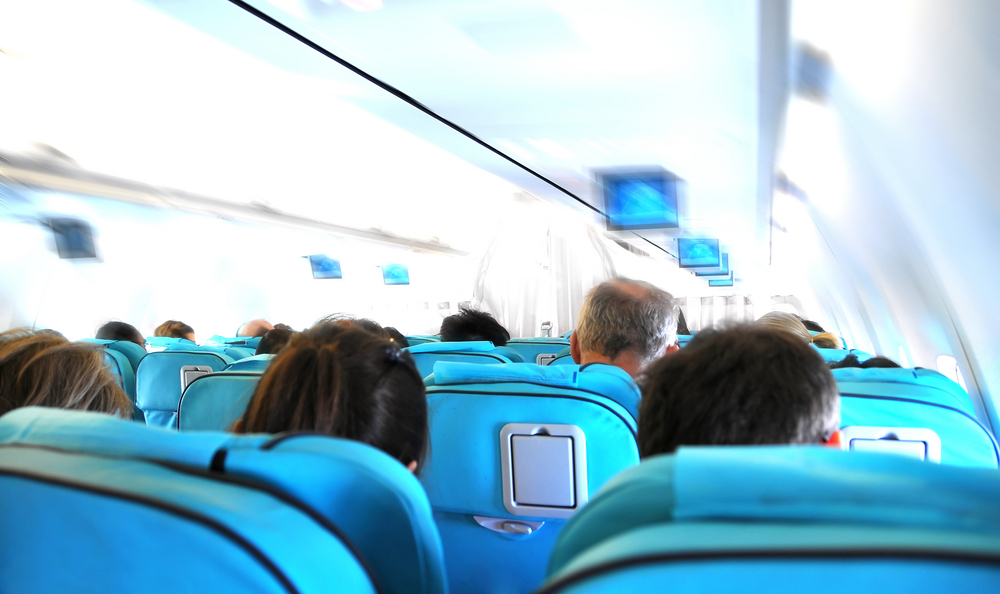 If “minus” isn’t already here, it’s coming.
But ask passengers what they want, and they’ll tell you that while
they love cheap tickets, they have no desire to be wedged into a seat
with 28 inches of “pitch” (that’s a rough measure of legroom) or to have
to pay extra for everything. It’s dehumanizing.
“I don’t want to be tortured,” says Judy Greene, a musician who lives in New York.
Durnford King, a TV writer based in Santa Monica, Calif., wonders,
“What’s next, rolling passengers up in bubble wrap and packing them in
like sausages?”
Here’s a better idea: Instead of adding economy “minus,” why not
expand economy “plus” — the so-called “premium” economy class section
that’s almost identical to coach sections before airlines were
carelessly deregulated by the federal government in the 1970s? Consumers
support the idea, and airline experts say it just might work.
Passengers would welcome a more spacious cabin.
“I want it to go back to the way it was,” says Willa Mathison, who
remembers flying before airline deregulation and is now retired in
Renton, Wash. Flying in economy class, she says, is almost unbearable,
and she can’t imagine it getting any worse.
“We have cut back on our travel just because it has become such a miserable experience to be crammed in an airplane,” she says.
Mathison, like a lot of regular air travelers, says she’d be willing
to pay extra to be treated better, but airlines make it hard. Premium
economy seats cost about 85% more than regular economy seats when booked
in advance. Business class is even pricier, and way outside her budget.
It’s as if airlines are giving her two choices: Fly in “torture” class or drive.
Travelers would be grateful to have some of the room back, and not
just for comfort reasons. When Jan Hoover sits in economy class, she
watches the flight crew demonstrate the “brace” position — lean forward,
head in your lap, arms covering your head — for an emergency landing.
She tries it.
“There’s not enough room,” says Hoover, a college lecturer who lives in Amsterdam, who notes she is a “normal-size” person.
Like many passengers, she feels the tight quarters in coach class are
unsafe and that the government should mandate a minimum amount of space
between seats.
But wouldn’t that raise the price of tickets? Not as much as you
think, say experts. In fact, some airlines might benefit from
eliminating their economy class sections.
Yes, if they had to remove economy class, it would hurt a little at
first. Frank Werner, an associate professor of finance at Fordham
University’s business school, estimates airlines would lose about 7% in
revenue if they decided to cut economy class and replace it with premium
economy.
“It would depend on how the airlines would price the
all-premium-economy seats and how that pricing would affect demand,” he
says.
Counterintuitively, he and economist George Hoffer think airlines
stand to make more money in the long term by eliminating the
uncomfortable seats, since it would take only a modest increase in
airfares to compensate for fewer seats on each plane. But in order to
work, the new seat standards would have to be government-mandated.
American Airlines tried to offer more legroom in economy class in 2000,
but failed when none of its competitors followed.
Hoffer, a transportation economist at the University of Richmond,
says it costs less to transport fewer passengers, so there’d be some
savings. But he also predicts that seat standards in economy class would
make it more difficult for discount carriers like Allegiant and Spirit
to compete, and thus for a new airline to break into a market. That
would put the larger, more established airlines at an advantage. Yet if
fares rose by just 7%, even passengers like Mathison could still afford
to fly.
“If you’re a big airline, you’re probably going to love this idea,” says Hoffer.
Airlines could stop the suffering in the back of the plane and
continue making money. Plus, they could knock off a few little carriers
everyone likes to complain about. Interesting idea.
Can we at least agree that economy “minus” should never happen? There are more civilized ways to turn a profit.
- Elliott
Subscribe to:
Posts (Atom)